Evaluating the Correlation between Automation and Rank Speed
Strategic Approaches to Search Engine Ranker in 2026
Automated link building has actually undergone significant changes as 2026 advances. Online search engine have actually sharpened their capability to find patterns, making the spray-and-pray methods of the previous entirely obsolete. Success in the present year relies on precision, filtering, and the ability to imitate human surfing behavior through software application. Online search engine Ranker stays a staple for those who comprehend how to stabilize volume with significance. The objective for 2026 is not just to create more links, but to create links that browse algorithms see as natural extensions of a website's development.
Effectiveness in any major city markets requires a departure from generic setups. Digital online marketers now invest more time on the initial setup phase-- identifying high-quality targets and cleaning up footprint lists-- than on the real execution. This shift towards quality control has actually stabilized rois for jobs that previously experienced high churn rates. Understanding the mechanics of contemporary search sets off permits a more calculated approach to automation.
Hardware and Facilities for High-Volume Projects
The technical requirements for running massive projects have actually scaled alongside search engine complexity. In 2026, a basic home computer system is no longer adequate for high-thread operations. Expert setups often involve dedicated servers with multi-core processors and a minimum of 64GB of RAM to deal with the memory-intensive tasks of concurrent scraping and posting. Competence in BuyGSAList Marketplace provides the foundation needed for scaling these projects without experiencing substantial downtime or software crashes.
Proxy management has become the most pricey and critical part of the 2026 setup. Datacenter proxies are easily flagged, leading lots of to change towards residential and mobile rotating proxies. While the expense per gigabyte or per proxy is greater, the success rate for submissions on high-authority platforms justifies the expenditure. Without dependable proxies, the software invests more time fixing captchas for stopped working efforts than really protecting placements. High-tier projects often utilize a hybrid approach, utilizing cheaper proxies for initial scraping and premium proxies for the last submission stage.
Advanced Filtering in the Competitive Market
Filtering is the barrier between an effective campaign and a manual charge. In 2026, setting strict parameters within the software is mandatory. This includes domain authority minimums, language filters, and outgoing link (OBL) counts. Websites that already have thousands of remarks or online forum posts are often disregarded, as search engines have actually cheapened these "link communities." Rather, the focus has shifted towards finding more recent, niche-specific websites where a backlink brings more weight.
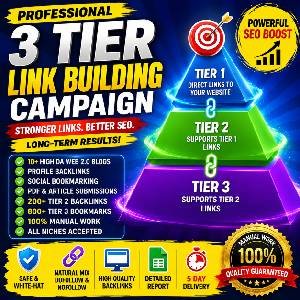
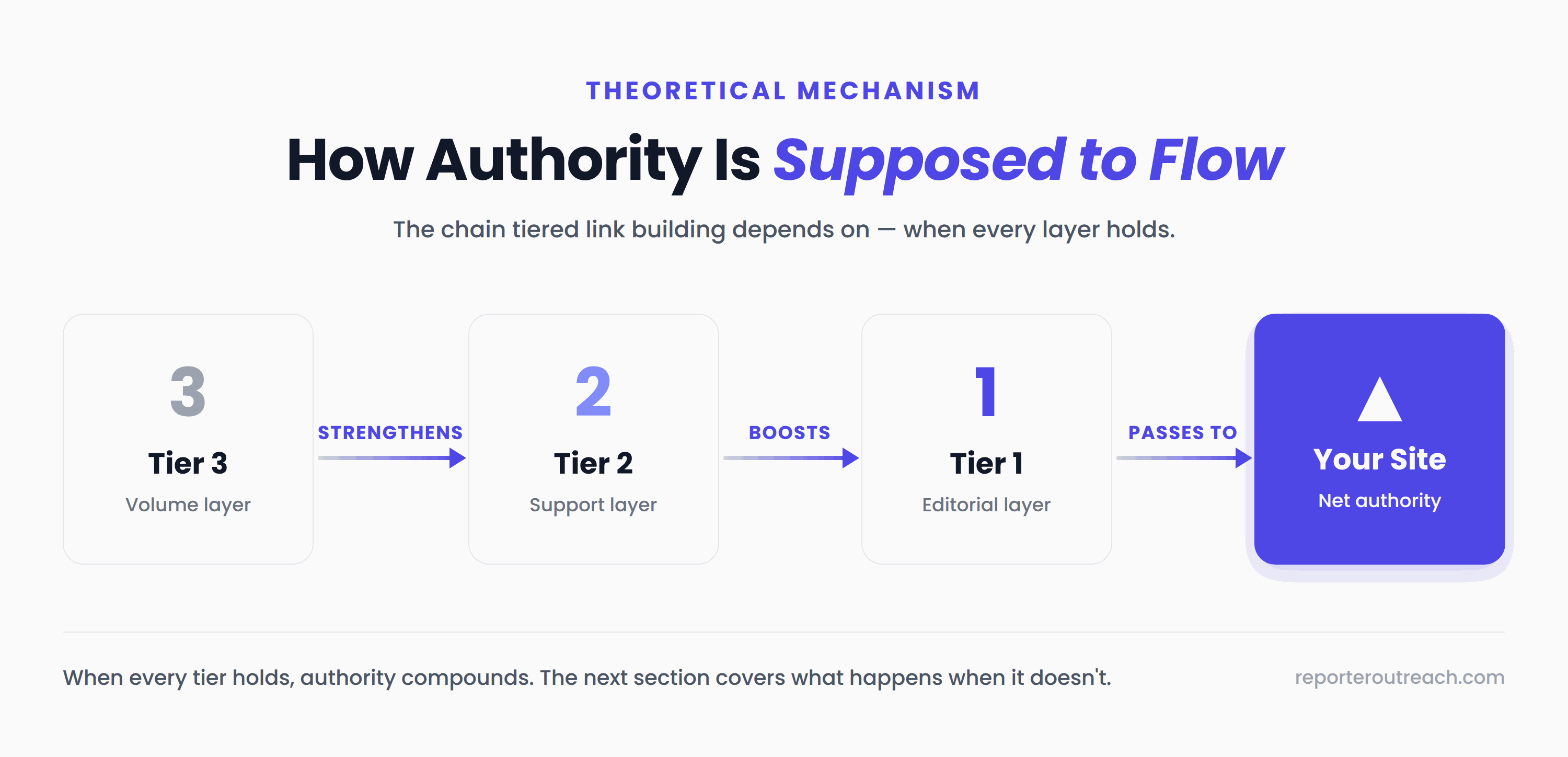
Many professionals pick BuyGSAList GSA Verified Lists to manage the technical heavy lifting of tiered link structures. Tiered building-- where Online search engine Ranker points links at existing premium backlinks rather than the main site-- has actually become a standard method to secure the "cash site." This technique permits for a higher volume of links on the secondary and tertiary levels, which presses authority up through the chain without straight exposing the main domain to lower-quality sources. It creates a buffer that is necessary for long-lasting stability in 2026.
Content Generation for Automated Campaigns
The quality of text utilized in automated posts has enhanced due to the integration of specialized AI tools. In 2026, spun content that reads like a random collection of words is instantly removed by spam algorithms. Modern campaigns use API-driven material generators that produce meaningful, topically relevant paragraphs. These tools make sure that the link is surrounded by text that actually provides context to the page it is placed on.
Significance is the primary metric for 2026. If a link for a service in a specific region appears on a blog about gardening in a different country, the value is negligible. Users now configure their software to perform "global" searches only after exhausting "regional" or "specific niche" footprints. This localized focus assists maintain a natural profile that satisfies both manual reviewers and automated bots. Content should be differed, using several titles, descriptions, and anchor text variations to avoid producing a detectable footprint.
- Use of top quality, readable material for all tiers.
- Implementation of niche-specific filters to increase topical importance.
- Regular updates to the worldwide blacklist to avoid "harmful" domains.
- Rotation of anchor text to consist of top quality, naked URL, and generic terms.
Captcha Resolving Costs and ROI for Agencies
Captcha technology has actually become significantly hard to bypass in 2026. While standard image captchas can be solved by automated services for a low expense, the advanced interactive puzzles require human-in-the-loop (HITL) services. This adds a layer of repeating expense to every project. To keep a favorable ROI, managers need to optimize their software to skip sites with prohibitively costly or unsolveable captchas unless the domain authority of that website is remarkably high.
The calculation for ROI in 2026 involves more than just counting links. It requires tracking the "index rate" of those links. A task that creates 10,000 links but only results in 100 indexed pages is a failure. Using devoted indexing services or constructing top quality "buffer" tiers are the 2 most typical ways to guarantee that the work carried out by Online search engine Ranker in fact translates into motion in the search results. Monitoring these metrics weekly enables quick modifications to the method before budget plan is wasted on non-indexing platforms.
Preserving Long-Term Results in the Region
One of the biggest mistakes seen in 2026 is the "set it and forget it" mentality. Online search engine are constantly updating their datasets of known footprints. A footprint that works in January may be entirely burned by April. Constant scraping of brand-new targets is necessary to keep the engine supplied with fresh information. Relying on "validated lists" bought from 3rd parties is a common shortcut, however the most successful operators in the local market generate their own distinct lists to remain ahead of the curve.
Link speed-- the speed at which new links are developed-- must likewise be handled carefully. An unexpected spike of 5,000 links for a brand-new site is a red flag. In 2026, the software's internal scheduler is utilized to drip-feed links over numerous months. This steady growth imitates the natural development of a site acquiring popularity. For developed brand names, higher speeds are more secure, but for brand-new projects, a conservative start is normally the better path to sustainable rankings.
Diversifying Engines Beyond Basic Blog Sites
In 2026, the variety of "engines" or platforms utilized is more essential than ever. Online search engine Ranker supports lots of different types, from forum profiles and guestbooks to image sharing websites and wiki platforms. A profile that consists completely of blog comments is easy to determine as artificial. A varied profile that consists of a mix of "no-follow" and "do-follow" links from various platform types appears far more genuine to ranking algorithms.
- Focus on niche-related forums to construct community-based authority.
- Usage document sharing platforms for high-authority contextual links.
- Incorporate social bookmarking to signal social signals and activity.
- Stabilize the link profile with a mix of various engine types.
The importance of "no-follow" links must not be neglected. While they do not pass direct "link juice," they are an important part of a natural link profile. In 2026, a site with 100% "do-follow" links is seen with suspicion. Smart operators set their jobs to target a natural ratio, usually around 20-30% "no-follow" links, to make sure the profile looks organic under close examination.
Future-Proofing Campaigns for Late 2026
As we look toward the end of 2026, the combination of automation and manual oversight is the winning formula. Purely automated jobs are progressively rare at the top of the search results for competitive terms. Rather, Browse Engine Ranker is used to support and amplify manual outreach efforts. By building a reliable structure of foundation links and second-tier assistance, the software application maximizes time for marketers to concentrate on top-level strategy and relationship building.
The software itself continues to receive updates to deal with new types of web security and platform structures. Staying present with the most current variation is a basic requirement, as older variations often fight with the newer web protocols. Routine maintenance of the software application, the proxy list, and the target URLs ensures that the maker remains a viable tool in the search professional's toolbox. While the methods of 2026 are more demanding than those of previous years, the potential for scaling development through smart automation remains substantial for those happy to do the work.